
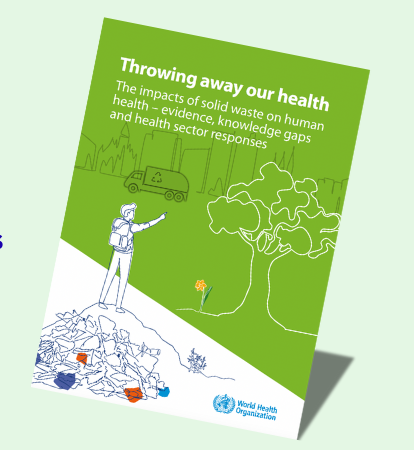
Launch of new WHO report on solid waste and health
WHO is launching a new global report, “Throwing away our health: The impacts of solid waste on human health.” Join the launch webinar on 16 Dec 2025, 13:00–14:00 UTC / GMT. DCW was pleased to advise on and review this important report and will join the panel discussion at the launch.
System-wide assessment of Indonesia’s plastic value chain
DCW was pleased to co-author two papers on a system-wide assessment of Indonesia’s plastic value chain. One, mapping external stakeholders, was published this week in the journal Environment Systems and Decisions. The other mapped both plastic and monetary flows and stakeholders dynamics, and was published in July in the high impact Journal of Cleaner Production. Both papers demonstrate the innovative use of the structured systems-based framework provided by CVORR (Complex Value Optimisation for Resource Recovery), for the earlier development of which DCW chaired the Steering Committee.
Forget everything you thought you knew: 10 insights from the frontline of extending waste management services
DCW was delighted to write the Introduction to October’s editorial in the ISWA peer-reviewed journal Waste Management & Research (WM&R), where Mike Webster gives his personal reflections from five years of working to extend waste collection services to previously underserved communities in Indonesia. The world is struggling to deal with the global waste emergency of more than 2.7 billion people worldwide lacking access to the basic service of municipal solid waste collection. Mike’s reflections offer a ‘breath of fresh air’.
We have a new Science-Policy Panel on Chemicals, Waste and Pollution!
After several years of fraught negotiations, 98 Member States of the UN agreed on 20 June 2025 to set up a new Intergovernmental Science-Policy Panel on Chemicals, Waste and Pollution. The official acronym is ISP-CWP, to sit alongside the existing Intergovernmental...
Rethinking waste and resource management for underserved communities
In DCW’s new paper with Andy Whiteman and Nicole Hennessy, published open access by the leading journal Oxford Development Studies, we spotlight the urgent need to rethink how to extend waste services to reach underserved communities. UNEP and ISWA’s GWMO2024 estimates that 2.7 billion people worldwide still lack access to solid waste collection, with at a least a billion more whose collected waste is open dumped or burned. Progress in extending services in upper middle income countries and in parts of larger cities in lower income countries has been steady, but too many unserved or underserved communities are proving hard to reach. We argue that it is time for a radical rethink of our approach to tackle this global waste emergency.
Marking 50 years since the first Control of Pollution Act 1974
I am shocked that the 50th anniversary of the first environment control legislation in the 1970s, and specifically the UK’s Control of Pollution Act 1974 (CoPA) has received so little attention and celebration. So I have written a Comment piece on CoPA’s Golden Jubilee for resource.co, one of the leading online news sites read by (UK) waste and resource management professionals.
Waste and resource management on COP29 agenda as a priority climate issue
I have been writing articles and blogs for nearly 10 years to challenge the common misperception that waste and resource management contributes minimally to mitigation of climate heating. At long last, my peer-reviewed paper with ISWA co-authors collating the evidence has now been published open-access. We show that one can have HIGH CONFIDENCE that the sector’s potential is SIGNIFICANT. The paper provides a Call to Action to enable this global opportunity to be realised.

DCW wins 2024 ISWA Publication Award
DCW won the 2024 ISWA Publication Award for his magnum opus, looking back over his long career at the evolution of waste and resource management since the first environmental control legislation in the 1970s, and reflecting on current and future priorities.
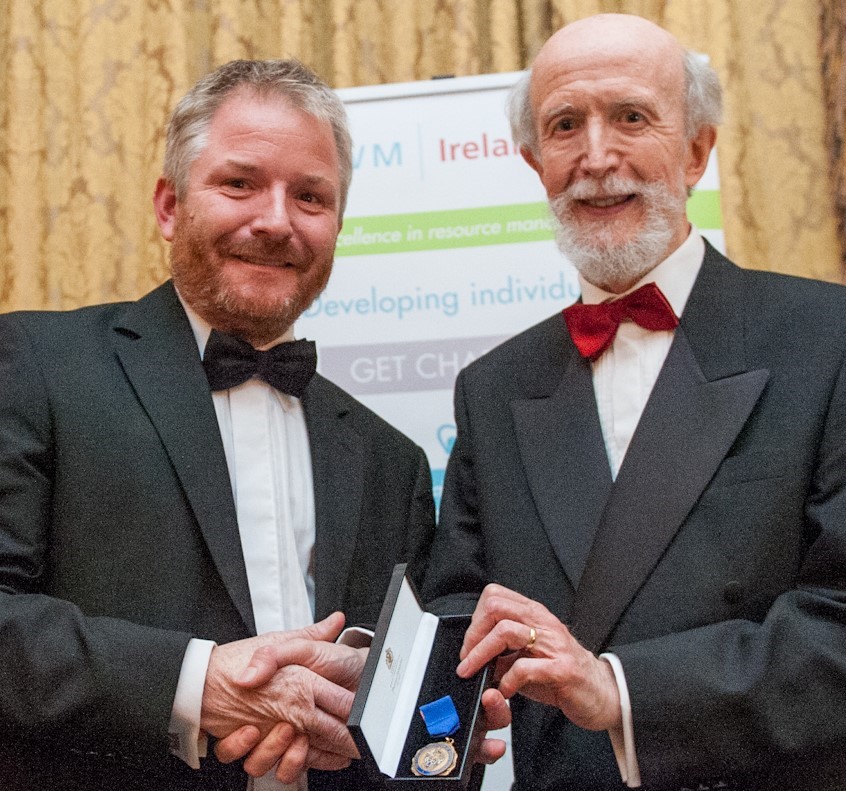
DCW awards his Presidential Medal
DCW awarded his CIWM Presidential Medal for 2018 to Mike Webster, the founder and CEO of the new charity Wasteaid, which is working directly with local communities to tackle the global waste crisis.
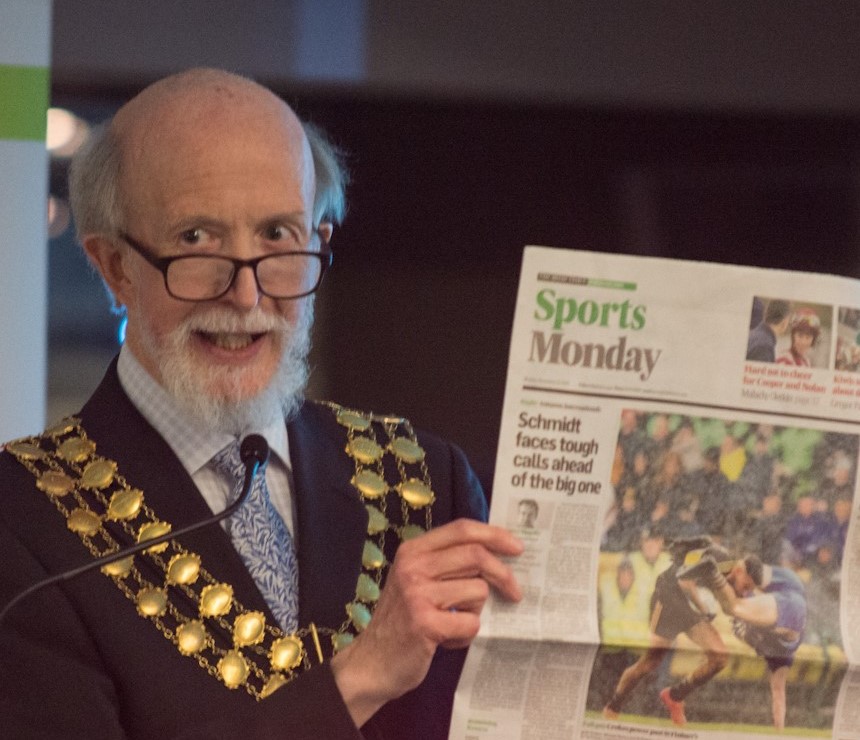
DCW hands over CIWM Presidency
DCW handed over to Enda Kiernan at the Aviva Stadium in Dublin on 13th November 2018. The Gaelic Football team which Enda manages appeared in the lead photo story of the previous day’s Irish Times.
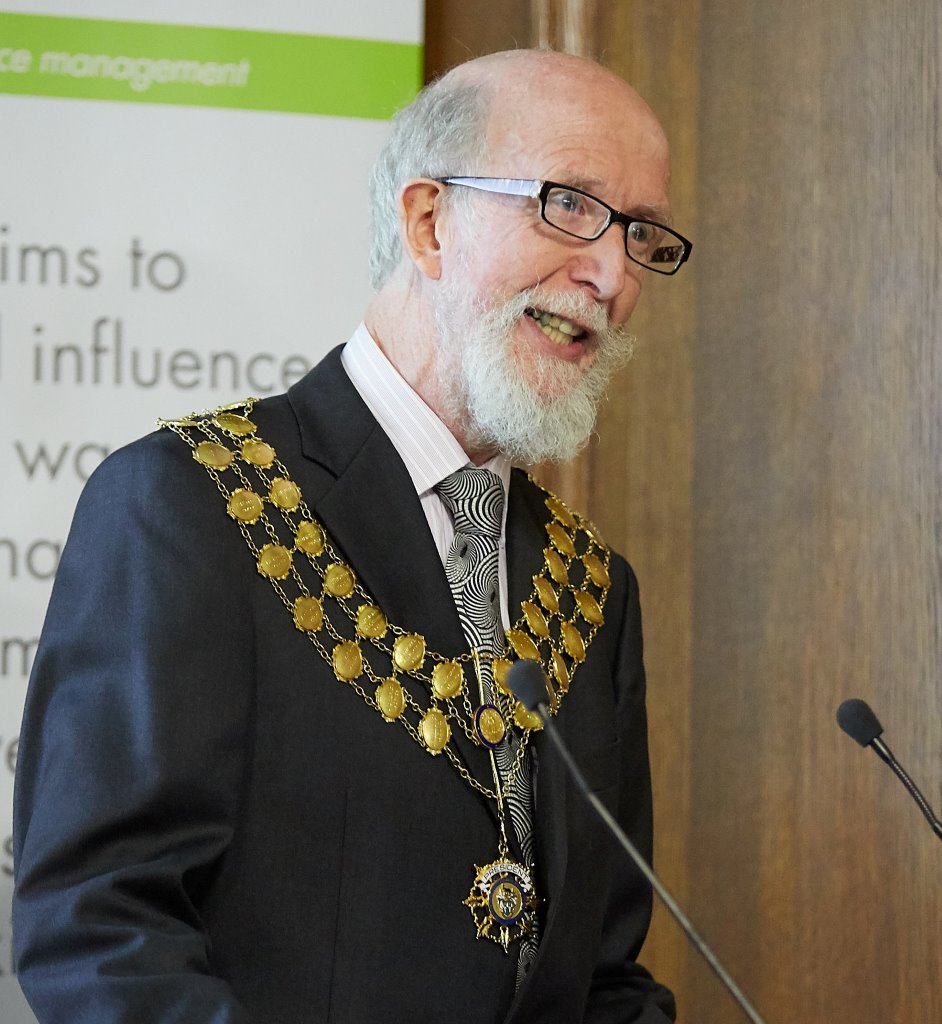
DCW inaugurated as CIWM President
Professor David C Wilson giving his inauguration speech as CIWM President 2017 at Church House Westminster in October 2017. His theme for the year was solid waste management as the forgotten utility service, underpinning modern society.

DCW’s CIWM Presidential Report 2017
DCW commissioned WasteAid UK to prepare a practical toolkit for poor communities on how to make useful products from the low-value plastics and organics in their waste. In its first year, the website was visited 56,000 times, with 7,000 downloads of the toolkit.
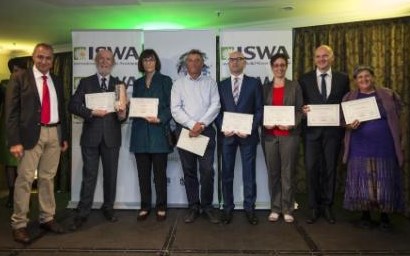
ISWA Publication Award 2015
DCW with co-authors Ljiljana Rodic, Andy Whiteman, Costas Velis, Barbara Oelz, Joachim Stretz and Anne Scheinberg, receiving the Award from ISWA Scientific and Technical Committee Chair Antonis Mavropoulos (left), at the ISWA 2015 World Congress in Antwerp on Tuesday 08 September.